2 Data Transmission
2 (d)(i) The artist emails the image file to their friends.
Explain how a file is broken down into packets and transmitted over a network.
2 (d)(ii) The packets can use many different methods of data transmission to travel.
Complete and annotate the diagram to show the difference between serial full-duplex transmission between two computers and parallel simplex transmission between two computers.
Serial full-duplex transmission:
Computer 1 ......................... Computer 2
Parallel simplex transmission:
Computer 1 ......................... Computer 2
A restaurant has an electronic ordering system. The system allows customers to select the food they want to order. The data for the order is transmitted across their network to a computer in the restaurant kitchen.
4 (a)(i) The data is sent using serial full-duplex data transmission.
Give two reasons why serial full-duplex is a suitable data transmission method for the data.
4 (a)(ii) Give one improvement that would be made to the data transmission if parallel transmission is used instead of serial transmission.
4 (b)(i) A checksum is used to check the data for errors after transmission.
Describe the process of the checksum error detection method.
4 (b)(ii) Identify one other error detection method that could be used to check for errors in the data.
A customer can also order food from home using the internet. The data for their order is broken down into packets and transmitted across the internet to the computer in the restaurant kitchen.
4 (c)(i) Tick (✓) one box to show which item would not be included in a packet's header.
| A destination address | |
| B originator's address | |
| C packet number | |
| D payload |
A customer can also order food from home using the internet. The data for their order is broken down into packets and transmitted across the internet to the computer in the restaurant kitchen.
4 (c)(ii) The packets of data may need to be reordered when they arrive at the computer in the restaurant kitchen.
Explain why the packets of data may need to be reordered.
7 Data is sent from an employee's computer to a server. The data is correct when it is sent, but an error is detected when the data is received.
(a) Describe how an error can occur in the data during transmission.
[2]
(b) Methods of error detection and correction can be added to make sure that errors are identified after data is transmitted.
Complete the statements about methods of error detection and correction. Use terms from the list. Not all terms need to be used. You should only use each term once.
acknowledgement automatic repeat query (ARQ) binary bit byte calculation check digit checksum correct echo check error even incorrect negative number odd positive timeout
A parity check is set to be or . A parity is added to each byte before transmission to make it match the set parity.
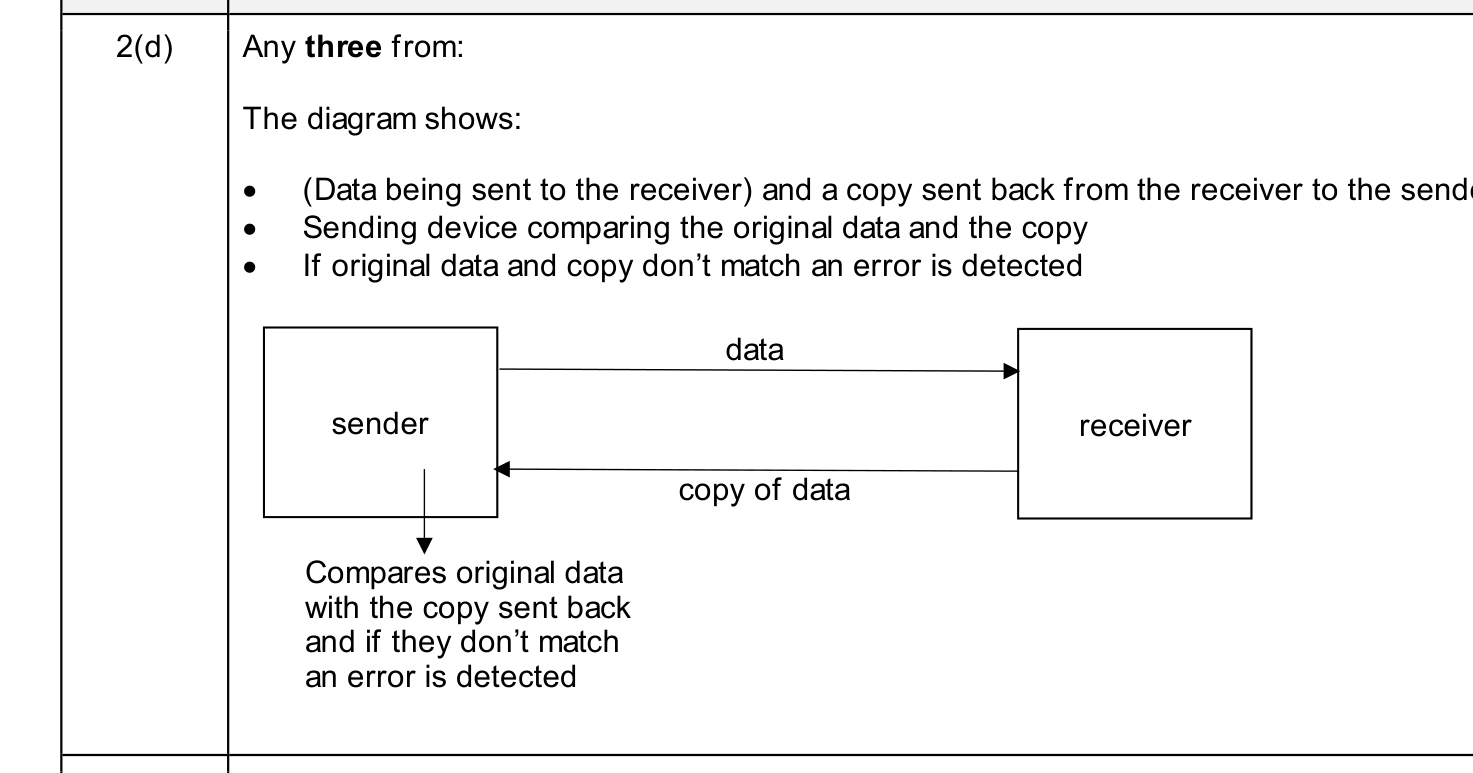
An involves comparing the data sent to the data received back from the receiving device.
An uses acknowledgement and . The acknowledgement system can be or . [8]
(b) The image data is broken down into packets to be sent across a network to the company.
The destination internet protocol (IP) address is read by a device in the network. The device uses the IP address to forward the packet towards its correct destination.
(i) State the name of the device that reads the destination IP address.
(ii) Identify the part of the packet where the destination IP address is found.
(c) The IP address has an IPv6 format.
Give three characteristics of the IPv6 format.
1 .........................................................................................................................................................................................................
2 .........................................................................................................................................................................................................
3 .........................................................................................................................................................................................................
(d) An echo check is used to check for errors after the image has been transmitted.
Draw and annotate a diagram to show how the echo check would detect any errors.
(e) The image data is encrypted using symmetric encryption.
(i) Tick (✓) one box to show the correct statement about symmetric encryption.
A Encrypted text is known as plain text.
B The most secure form of encryption.
C The encryption key is shared with any device receiving the encrypted data.
D Two different keys are used.
(ii) Give one other type of encryption that could be used.
(d) Each robot has a media access control (MAC) address.
Tick (✓) one box to show the correct statement about a MAC address.
A It is assigned by the manufacturer.
B It is assigned by the product.
C It is assigned by the router.
D It is assigned by the user.
A theatre has a microphone on stage that is connected by cables to several speakers around the theatre. A person speaks into the microphone and their voice is output from the speakers.
Identify the most appropriate data transmission method for this purpose. Explain your choice.
Data transmission method ...................................................................................................................................................................................
Explanation ...................................................................................................................................................................................................
(c) The mouse is connected using a universal serial bus (USB) connection.
(i) Explain how data is sent using the USB connection.
(ii) Give two benefits of using a USB connection for this purpose.
(iii) Give one drawback of using a USB connection for this purpose.
(f) The data for the music and audio books needs to be checked for errors after being transmitted from the cloud.
(i) Explain how errors may occur in the data during transmission.
(ii) Give two error detection methods that could be used to check for errors in the data after transmission.

Data is split into packets before it is transmitted across a network.
(a) The diagram shows a packet with three sections.
Complete the diagram by writing the name of each section of the packet.
Write an example in each section of what would be stored in that part of the packet.
Packet
The first section is called the
.................................................................................................
First
Example .................................................................................................
The second section is called the
.................................................................................................
Second
Example .................................................................................................
The third section is called the
.................................................................................................
Third
Example .................................................................................................
[6]
(b) Packets can be sent across a network using different methods of data transmission.
Explain how data is transmitted in the two given methods of data transmission.
(i) Serial full-duplex
...................................................................................................................................................................................................................
...................................................................................................................................................................................................................
...................................................................................................................................................................................................................
...................................................................................................................................................................................................................
...................................................................................................................................................................................................................
...................................................................................................................................................................................................................
...................................................................................................................................................................................................................
................................................................................................................................................................................................. [4]
(ii) Parallel half-duplex
...................................................................................................................................................................................................................
...................................................................................................................................................................................................................
...................................................................................................................................................................................................................
...................................................................................................................................................................................................................
...................................................................................................................................................................................................................
...................................................................................................................................................................................................................
...................................................................................................................................................................................................................
................................................................................................................................................................................................. [4]